AI Agents Are Becoming the New Small Business Team in 2026

Small business has always had the same problem. Too
much work, too few hands, and not enough time to keep everything moving. The
owner answers messages, updates the website, follows up with customers, posts
on social media, checks orders, handles invoices, and still has to think about
growth. That pressure is not new, but the tools available now are changing the
game in a very real way.
AI agents are no longer just a fancy term thrown
around in tech circles. They are becoming actual helpers in business
operations. They do not just answer questions like a normal chatbot. They can
carry out tasks, move through workflows, make decisions based on instructions,
and keep working without needing constant supervision. That is why so many
small business owners are starting to see them as more than software. They are
treating them like digital team members.
The idea sounds big, but the appeal is simple. A
small business owner wants less chaos, faster execution, and lower operating
costs. AI agents are starting to deliver all three. They are not perfect, and
they do not remove the need for human judgment, but they are already good
enough to handle a surprising amount of repetitive work. That means the owner
can spend more time on product quality, customer relationships, and strategy.
What makes this shift even more important is the
scale of it. In the old model, if a business wanted more output, it usually
needed more people. More people meant more payroll, more training, more
management, and more room for mistakes. In the new model, one person can
supervise a set of AI agents that each handle a specific part of the business.
One agent can draft emails. Another can organize leads. Another can prepare
reports. Another can update content. Another can assist with customer service.
The business starts to look bigger from the outside without the same internal
cost.
This is why people keep saying AI is replacing jobs,
but that is only part of the story. In many cases, AI is replacing tasks first.
That matters because tasks are what fill most workdays. The small business
owner who spends hours replying to routine questions does not need to become a
customer service agent. The owner who spends time formatting social posts does
not need to become a content production machine. AI agents can take over the
busywork and leave the human with the work that actually needs judgment.
The interesting thing about 2026 is that the tools
are not just smarter. They are easier to connect. A few years ago, AI systems
often felt isolated. They could write text, but they could not easily plug into
the rest of a business. Now they can connect with email, calendars, documents,
websites, form tools, and internal systems. That makes them more useful in
daily operations. A small business can set up a workflow where leads are
captured, sorted, tagged, and answered automatically. Another can create a
support flow that sends common questions to an AI agent before a human steps in
for the harder issues.
That does not mean everything should be automated.
In fact, the best use of AI agents is not full replacement. It is selective
delegation. The smart business owner uses agents where speed and repetition
matter. Human staff still matter where trust, emotion, and nuance matter. That
balance is the real story. Businesses that understand it will probably move
faster than businesses that try to do everything manually or automate
everything blindly.
What AI agents actually do
A lot of people still confuse AI agents with
ordinary chat tools. A chatbot waits for a prompt and gives an answer. An AI
agent can take that answer and turn it into action. It can browse pages, gather
data, make selections, fill fields, send outputs, and continue working through
a chain of steps. That makes it useful for work that would normally require a
person to click around through several tools.
For example, a business owner might ask an agent to
research five competitors, collect their pricing, summarize their offers, and
put the results into a table. Another agent might be told to scan incoming
customer messages, classify them by urgency, and draft replies for review.
Another could be set to prepare a weekly content calendar based on trending
topics, old posts, and keyword themes. The point is not that the agent thinks
like a human. The point is that it moves through a process with less friction
than manual work.
This matters because small businesses often lose
momentum in the tiny parts of work. It is not the big decisions that slow
people down. It is the repeated actions. Copying data from one place to
another. Checking the same inbox. Rewriting similar messages. Updating records.
Setting reminders. A business that clears away those small drains gets back a
lot of time.
The strongest case for AI agents is not
fantasy-level automation. It is practical leverage. A business owner can keep
the business running even on a lean budget. That is why AI agents fit so well
with the current small business mindset. Many owners are not trying to build
giant corporate structures. They want a small, responsive, profitable setup
that can move fast without a lot of overhead.
Why small businesses care
Small businesses care about AI agents for three main
reasons: time, money, and consistency. Time is the first one because most
owners are already overloaded. Money is the second because hiring is expensive
and not every task needs a full-time employee. Consistency is the third because
AI tools can handle repetitive work in a standard way once the workflow is
built.
There is also a psychological reason. Business
owners like feeling in control. When operations depend on too many moving
parts, the business starts to feel fragile. An AI agent system can make the
business feel more organized because the owner can see where things are going,
what has been done, and what still needs attention. That clarity alone can be
valuable.
Another reason is speed. In a digital market, speed
often matters more than polish. A customer who gets a quick reply is more
likely to stay engaged than one who waits for a human reply two days later. A
lead who gets a follow-up immediately is more likely to convert than one who
gets a delay. AI agents help businesses respond faster without making the owner
sit at a keyboard all day.
Then there is the fact that many small businesses
already use some form of automation, even if they do not call it that. Email
autoresponders, booking tools, payment reminders, customer forms, and social
schedulers are all basic versions of a larger trend. AI agents are the next
step because they can handle decisions inside those systems rather than only
doing fixed actions.
This is why the conversation is shifting from “Can
AI help?” to “Which parts of the business should AI handle?” That is a more
useful question. It forces business owners to think clearly about labor,
priorities, and bottlenecks.
Where agents help most
AI agents are strongest in work that repeats often,
follows a pattern, and does not always need human emotion. Customer support is
one of the clearest examples. Many businesses get the same questions again and
again. Shipping times. Pricing. Order status. Booking changes. Basic policy
questions. An AI agent can handle those quickly and free the human team to deal
with more complicated cases.
Content production is another major area. A business
needs ideas, outlines, captions, summaries, product descriptions, and email
drafts. An agent can help create the first version of these assets much faster
than a person starting from zero. That does not mean the final version should
be careless. It means the boring first step can happen quickly, giving the
human more room to refine the message.
Lead management also fits well. Many businesses
waste leads because nobody follows up on time. An AI agent can sort leads, send
reminders, label them by interest, and suggest follow-up language. That alone
can improve conversions. For service businesses, this is especially useful
because speed matters a lot when someone is comparing options.
Admin work is another quiet winner. Invoices,
appointment reminders, file sorting, meeting notes, checklist updates, and
internal summaries do not need to eat a full workday. Agents can manage much of
that with the right setup. The owner still needs to verify important details,
but the workload becomes far lighter.
Research is also a good fit. A business owner often
needs quick answers about competitors, trends, suppliers, product ideas, or
customer behavior. An AI agent can collect and organize that information much
faster than someone doing it manually. The result is not perfect intelligence,
but it is enough to help with smarter decisions.
What still needs humans
Even with all this progress, human work is not
disappearing. In fact, the more AI agents enter business, the more valuable
certain human skills become. Strategy still belongs to people. Judgment still
belongs to people. Brand voice still belongs to people. Relationship building
still belongs to people.
A machine can send a message, but it does not
understand the full emotional weight of the person receiving it. A machine can
summarize a complaint, but it does not care about the customer’s frustration. A
machine can suggest a marketing angle, but it does not truly know what feels
right for a brand in a specific market. That is where human control matters.
There is also the question of trust. Customers can
sense when a business has gone too far with automation. Too many generic
replies can make the company feel cold. Too many robotic interactions can make
the brand feel distant. The businesses that win will not be the ones that
automate everything. They will be the ones that use AI to reduce friction while
keeping the human side visible.
That balance is especially important for small
brands. Big corporations can sometimes hide behind systems. Small businesses
cannot. Their personality is part of the value. Their voice is part of the
product. Their trust is part of the sale. AI agents can support those things,
but they should not erase them.
So the human role does not disappear. It changes.
The business owner becomes more like an operator, editor, and decision-maker.
The AI handles the repetitive layer. The human handles direction, quality, and
meaning. That is the real divide.

How a solo business can use them
A solo business can start small. The smartest move
is not trying to automate everything at once. It is choosing one problem and
solving that first. For example, a freelancer or small store owner might begin
with customer replies. If a lot of the messages are repetitive, an AI agent can
draft responses and tag the ones that need a person.
A content creator can use an agent to generate topic
ideas, create outline drafts, summarize research, and prepare social post
variations. A consultant can use one to organize leads, prepare intake notes,
and build meeting summaries. A shop owner can use one to track inventory
questions, prepare product descriptions, and support order follow-ups. These
are small wins, but they add up quickly.
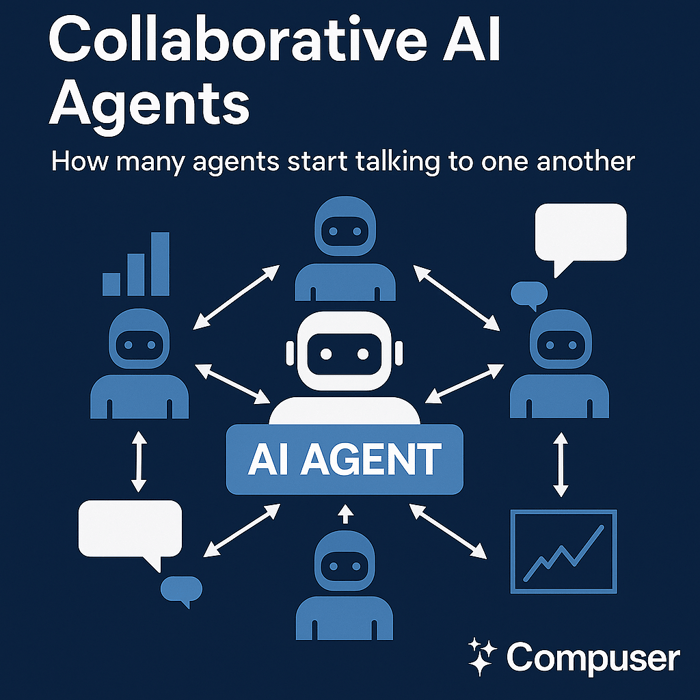
The best setup usually looks simple. One agent for
communication. One for research. One for content. One for admin. Each one has a
narrow job. That is important because AI systems work better when the task is
clear. Vague instructions usually lead to weak output. Tight instructions lead
to better results.
A solo operator also needs review habits. AI can
move fast, but speed without checking can create mistakes. So the owner should
inspect important outputs, especially anything involving money, customer
promises, public messaging, or legal matters. The goal is not blind trust. The
goal is controlled speed.
This is where many businesses will stumble. They
either reject AI completely or use it carelessly. The better path sits in the
middle. Use the agent where it saves time. Review the output where it matters.
Keep the business voice human. That approach is practical and sustainable.
The cost angle
A huge part of the excitement around AI agents is
cost reduction. Hiring people is valuable, but payroll can crush a small
operation if the business is not ready. AI agents give smaller businesses a way
to expand output before they expand headcount. That can be a smart survival
move in a tight market.
But the cost conversation needs honesty. AI is not
always free once you count subscriptions, integrations, setup time, and
troubleshooting. The system may still be cheaper than a hire, but it is not
magic. Business owners need to compare the real cost of the tool against the
value of the time saved.
Still, the upside is strong. If a $30 or $100 monthly
tool saves hours of labor, that is meaningful. If it helps recover lost leads,
that can be even better. If it cuts response time and improves customer
satisfaction, the effect can spread across the whole business. Sometimes the
value is not in replacing one person. It is in helping one person do the work
of a much larger operation.
That is why AI agents fit the current economy so
well. Many small businesses want expansion without a huge payroll jump. They
want more leverage, not more stress. AI offers exactly that when used with
discipline.
Risks and limits
There are real risks too. AI agents can make
mistakes. They can misunderstand instructions. They can give wrong answers.
They can overreach if not controlled properly. A business that trusts them too
much can create a new kind of problem instead of solving an old one.
Privacy is another issue. Some agents need access to
sensitive business data. That data must be protected. Not every tool deserves
full access to customer records, payment details, or internal files. Business
owners need to think carefully about permissions.
There is also the risk of sameness. If every
business uses the same tools in the same way, the output starts to feel
identical. That is where human taste becomes important again. AI can help
produce the base layer, but the final shape should still reflect the brand.
Otherwise, the business becomes just another generic machine output factory.
The last risk is dependency. If a business builds
too much around one platform, changes in pricing or policy can become a problem
later. That is why flexibility matters. Good business use of AI should be
modular, not fragile. Owners should keep control of the process and avoid
handing everything to one system.

What this means next
The next phase of small business will probably look
different from the old model. Instead of hiring first and automating later,
more owners will automate first and hire only where human effort is clearly
needed. That does not make business less human. It makes it more focused.
AI agents will not solve every business problem.
They will not replace taste, leadership, patience, or trust. But they will
remove a lot of the friction that keeps small businesses from growing. That is
enough to matter. In some cases, it may be the difference between staying stuck
and breaking through.
For entrepreneurs, freelancers, and small teams, the
opportunity is simple. Learn how these tools work. Find one workflow to
improve. Start with tasks that waste time. Keep the human at the center of the
brand. The businesses that do this well will move faster than the ones waiting
for a perfect moment.
The shift is already happening. A solo founder can
now run a business that once would have needed a small staff. A tiny team can
operate like a much larger one. A smart owner can turn AI agents into a quiet
support system that never sleeps, never gets bored, and never forgets the next
step.
That does not mean the end of human work. It means
the start of a new setup where people guide the machine instead of drowning
under routine tasks. For small businesses, that may be the most practical
upgrade of this decade.
One good next article idea for this blog would be a follow-up on the same theme, such as how to build a simple AI agent workflow for a one-person business, or how AI agents are changing customer support in 2026.


Comments
Post a Comment