How AI Agents Let Solopreneurs Run Million Dollar Operations Without a Single Employee in 2026
Small business owners face pressure from rising costs and tight margins. Many now turn to AI agents as the practical fix. These systems handle the daily grind of sales calls, customer replies, content creation, and order processing. One person oversees everything while the agents do the heavy lifting. No extra salaries. No hiring headaches. Just steady output that scales with the business.

The change picked up pace through early 2026. Better models arrived. Integration tools became easier to use. Solopreneurs who set up even basic agent teams saw their revenue climb without adding staff. Traditional setups with full teams started to look outdated. The numbers tell a clear story. Operating expenses drop fast when automation takes over repetitive work. Some owners report handling twice the customer volume they managed before, all with the same solo effort.
AI agents differ from simple chat tools in one key way. They do not wait for commands. They pursue goals on their own. Give an agent a task like "follow up on leads from last week and book meetings." It checks the calendar, sends emails, pulls data from a CRM, and confirms details. Regular chatbots answer questions. Agents complete full workflows end to end.
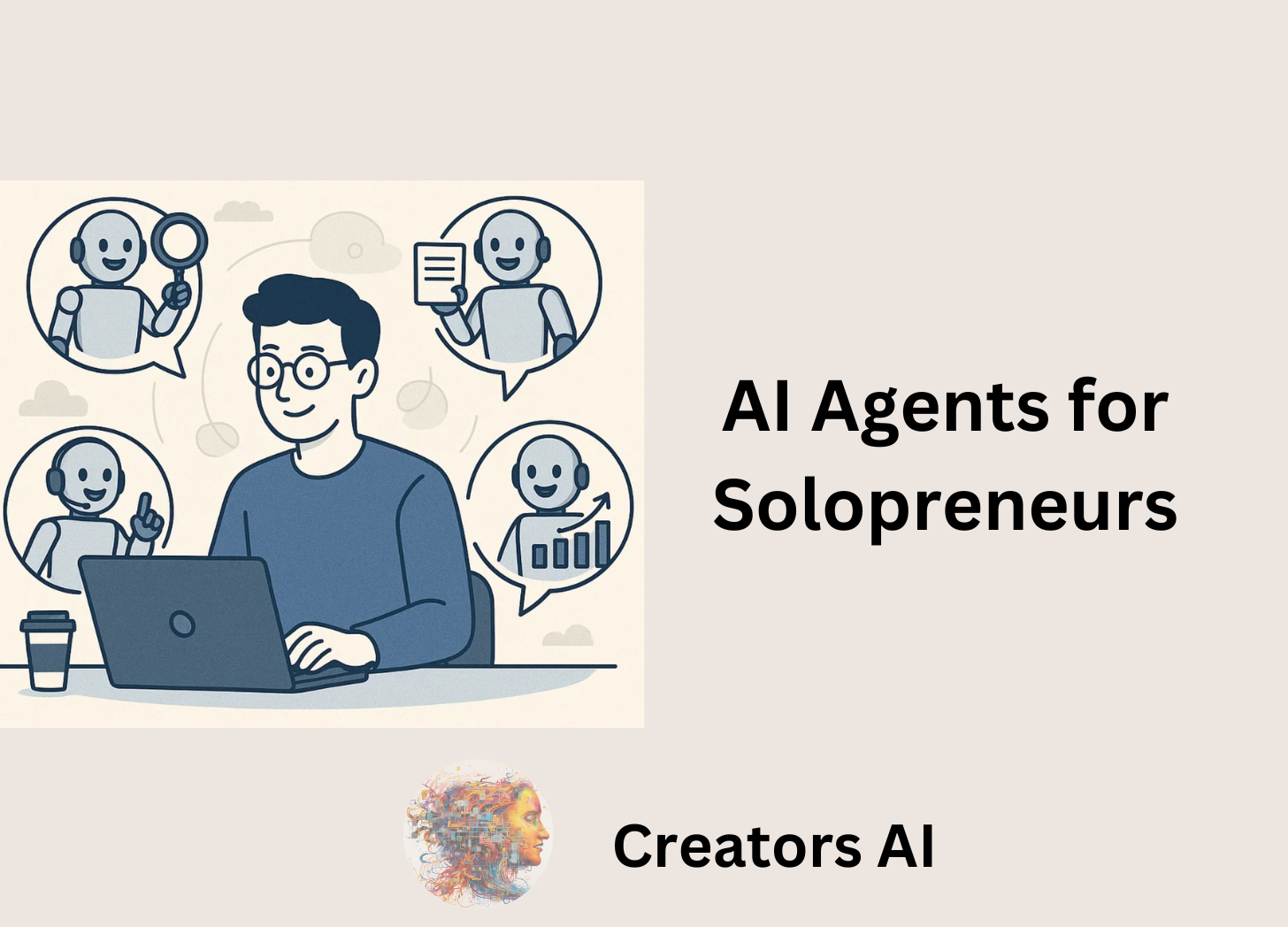
This capability comes from connecting the agent to real tools. It can browse websites, send messages through email or messaging apps, update spreadsheets, or process payments. Frameworks such as CrewAI or similar setups let users build teams of specialized agents. One agent researches market trends. Another drafts proposals. A third qualifies leads and schedules calls. They hand off work between themselves without constant human checks.
Solopreneurs benefit most because they already juggle every role. Marketing, sales, support, and admin eat up the day. An agent team splits those duties. The owner sets the overall direction once. After that the system runs. A freelance consultant might use agents to scan job boards, customize proposals, and track client feedback. An e-commerce seller relies on agents to monitor stock levels, reply to inquiries, and suggest upsells based on past purchases.
The cost advantage stands out. Many agents run on pay-per-use models from providers like OpenAI or Anthropic. A full day of activity across several agents might total a few dollars at most. Compare that to one employee salary plus benefits and taxes. The savings add up fast. Owners who switched early in the year freed up cash for marketing or product development instead of payroll.
Setting up an agent team starts with picking the right platform. Options exist that require no coding background. Users define roles in plain language. For example, label one agent as "lead qualifier" and describe its job: review incoming inquiries, score them by budget and urgency, then book a discovery call. Link it to email accounts, calendars, and a simple database. Test a few sample tasks to refine the instructions.
Next comes connecting external services. Most platforms support APIs for popular tools like Gmail, Stripe, Shopify, or Google Sheets. The agent learns to pull customer data or push updates automatically. Training happens through examples rather than complex rules. Feed it a few past successful interactions. It starts to match the pattern on its own.
A typical workflow for a service-based business looks like this. A potential client submits a form on the website. The intake agent acknowledges the message, asks clarifying questions if needed, and logs the details. The qualification agent reviews the information against set criteria and decides whether to pursue. If yes, the scheduling agent checks availability and sends a calendar invite. Once the meeting happens, a follow-up agent sends notes and next steps. The owner only steps in for the actual consultation.
E-commerce owners follow a similar pattern. An order comes in. The fulfillment agent checks inventory, generates shipping labels, and notifies the customer. A support agent monitors for questions and resolves common issues like tracking updates or returns. A marketing agent analyzes purchase history and triggers personalized discount offers. Everything flows without the owner touching each order.

Real results show up across different niches. One online course creator automated enrollment, drip email sequences, and student support. Enrollment grew 40 percent in the first quarter while the owner focused on creating new material. A digital marketing freelancer built agents to handle client reporting, ad performance reviews, and content calendar planning. Billable hours increased because admin time dropped to almost zero.
Another example comes from a small SaaS tool seller. Agents managed churn reduction by reaching out to at-risk users with usage tips. They also upsold add-ons based on feature adoption data. Monthly recurring revenue stabilized and then climbed without extra sales staff. These cases share one trait. The owners invested time upfront to define clear goals and test the flows. After that the agents operated independently.
Scaling becomes straightforward once the basic team runs well. Add more specialized agents as the business grows. A content agent can generate social media posts or blog drafts for review. An analytics agent compiles weekly reports and flags trends worth attention. The owner stays in the loop through summary dashboards rather than daily oversight.
Common setup hurdles exist but stay manageable. Agents sometimes misinterpret vague instructions. The fix involves rewriting prompts with specific examples and boundaries. Connection errors pop up when APIs change. Regular checks and fallback alerts keep things stable. Most platforms include logging features that show exactly where an agent got stuck. Owners review those logs once a week and tweak as needed.
Data privacy matters when agents handle customer information. Choose platforms with strong encryption and limit access to only necessary accounts. Many solopreneurs start with internal tools before connecting live customer data. This cautious approach avoids issues while building confidence in the system.
The timing feels right in 2026 because underlying models improved in reasoning and tool use. Response quality rose. Error rates fell. Integration options expanded to cover almost every business app. Early adopters gained a clear edge over competitors still relying on manual processes or expensive teams.
Solopreneurs who adopt this approach report higher satisfaction too. They spend time on strategy and creative work instead of repetitive tasks. Burnout drops. Growth accelerates because the operation no longer depends on the owner's daily availability. Vacations become possible without the business grinding to a halt.
Looking ahead, agent capabilities will keep expanding. Multimodal features already let them process images, documents, and voice inputs. Future updates may add deeper integration with physical tools or more advanced decision making. For now the available setups deliver enough power to transform a solo operation into something that competes with larger companies.
Owners who delay miss the window to build momentum. Competitors who implement agents first lock in efficiency gains and customer loyalty. The barrier to entry sits lower than ever. Basic teams take a weekend to prototype and a couple of weeks to polish.
The shift does not eliminate the need for human judgment entirely. Owners still set vision, approve major decisions, and handle unique situations. Agents simply remove the volume work that used to consume most hours. The result is a leaner, faster business model built for 2026 realities.

Anyone running a side hustle or full business can test this today. Start small with one workflow such as email management or lead follow-up. Measure the time saved and the output gained. Expand from there. The tools exist. The results speak for themselves. Solopreneurs who embrace AI agents position themselves to grow without the traditional limits of headcount and overhead.
This approach changes how businesses operate at the smallest scale. One person with smart agents can deliver enterprise-level service and scale revenue accordingly. The playbook stays simple: define clear tasks, connect the right tools, monitor lightly, and let the system run. Those who follow it report consistent gains in both profit and personal freedom.
By mid-2026 the pattern repeats across industries. Service providers, creators, retailers, and consultants all find ways to automate their core loops. The ones who act early pull ahead. The rest scramble to catch up later at higher cost. The choice belongs to each owner right now. Build the agent team that matches the business needs and watch the operation run smoother than it ever did with human-only processes.


Comments
Post a Comment