Orbital Servers and Laser Power: Why the Next AI Boom May Happen Above Earth
For decades, space was treated like a scientific playground and a military observation deck. Satellites handled communications, GPS navigation, weather forecasting, and surveillance. Everything else stayed on Earth because building infrastructure in orbit sounded absurdly expensive. That assumption is beginning to crack.
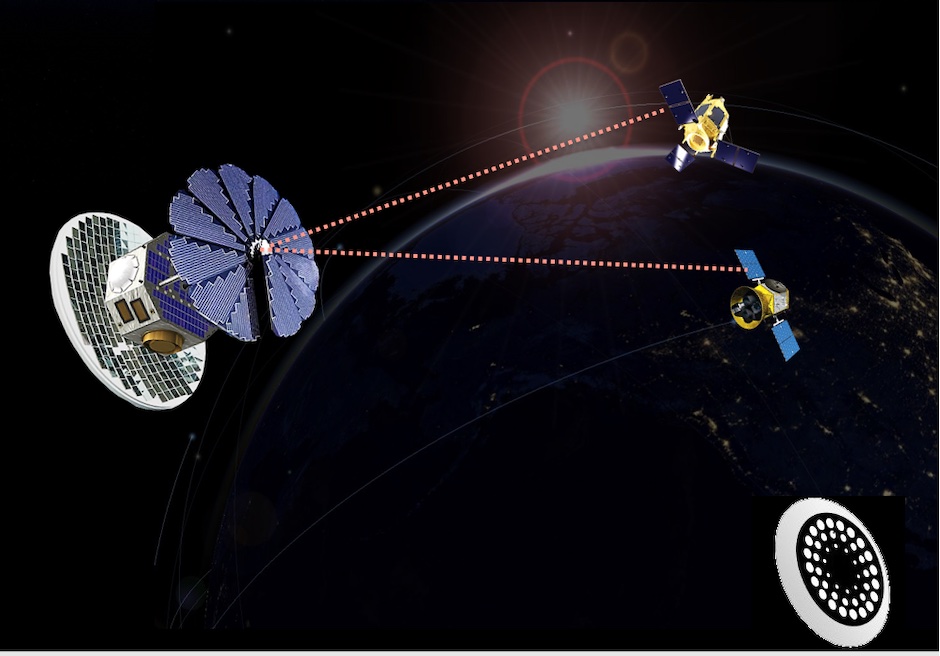
Artificial intelligence is forcing a complete rethink of where computing power can exist. AI systems consume staggering amounts of electricity. Training advanced models requires gigantic data centers filled with specialized chips running nonstop. The power demand is climbing so aggressively that some technology executives now speak about energy the same way oil companies once did. Whoever controls future energy supply may control future AI dominance.
That pressure has pushed startups, defense contractors, venture capital firms, and national governments toward an idea that once belonged to science fiction: moving parts of the digital economy into space.
The conversation is no longer limited to satellites. Companies are now discussing orbital data centers, space based solar power stations, laser energy transmission, lunar mining operations for computing materials, and autonomous infrastructure floating above Earth. Billions of dollars are already moving into the sector. The race has started before most people even noticed.
The AI Power Problem on Earth
Modern AI models require extraordinary infrastructure. A single advanced training run can consume enough electricity to power thousands of homes. The larger these systems become, the more difficult it becomes to support them with existing grids.
Traditional data centers already strain local utilities. In some regions, energy providers are delaying new AI facilities because the electrical demand is too high. Water consumption is another issue. Massive server farms need cooling systems, and cooling requires enormous quantities of water.
Tech companies have started buying nuclear power agreements, investing in geothermal systems, and constructing private energy partnerships simply to maintain future AI growth. Yet even those efforts may not be enough.
This is where space enters the discussion.
Orbit offers several advantages that Earth cannot easily match. Solar energy in space is uninterrupted by weather, clouds, or nighttime. Temperatures in space can assist with cooling systems. Orbital infrastructure can theoretically collect solar power twenty four hours a day. That creates the possibility of energy abundance on a scale difficult to replicate on Earth.
For AI companies facing an energy bottleneck, the attraction is obvious.
The Rise of Orbital Data Centers
The idea of placing data centers in orbit used to sound financially ridiculous. Launch costs alone made it impossible. But the economics of spaceflight have changed dramatically.
Reusable rockets transformed the industry. Companies like SpaceX helped slash launch costs and normalized rapid deployment schedules. Private space companies no longer operate like slow moving government contractors. They move like aggressive tech startups.
That shift opened the door for orbital computing infrastructure.
Several companies are now developing compact data centers designed specifically for space environments. These systems would process information in orbit instead of sending every task back to Earth. Initially, orbital computing may handle specialized workloads such as military analysis, satellite coordination, climate modeling, and AI inference.
The long term ambition is far bigger.
Future orbital data centers could support large scale AI training operations powered entirely by space based solar systems. Instead of relying on overloaded terrestrial grids, these facilities would operate independently above the planet.
One major advantage is latency reduction for satellite networks. As more communication systems move into orbit, processing information directly in space becomes more efficient than bouncing signals between Earth and satellites repeatedly.
There is also a geopolitical advantage. Orbital infrastructure cannot easily be constrained by local zoning laws, regional environmental restrictions, or national power shortages. Nations and corporations understand this very clearly.

Space Solar Power Is Back
Space based solar power has existed as a concept for decades. Earlier versions appeared in scientific studies during the 1960s and 1970s, but the technology was too expensive and too immature to deploy.
Now the conversation has changed.
Modern launch systems, robotics, miniaturized electronics, and AI driven automation have revived interest in orbital energy collection. Instead of building small experimental platforms, companies are now discussing industrial scale solar stations capable of transmitting power back to Earth.
The basic idea works like this:
Gigantic solar arrays in orbit collect sunlight continuously. The energy is converted into microwaves or laser beams and transmitted toward receiving stations on Earth. Those ground stations convert the incoming energy into usable electricity for cities, industries, and data centers.
Unlike ground based solar farms, orbital systems never experience cloudy days or nighttime interruptions. In theory, they could produce stable baseload power around the clock.
Governments are paying attention because energy independence has become a national security issue. AI competition between major powers is accelerating, and whoever secures the largest reliable power supply gains a major strategic advantage.
Japan, China, the United States, and several European initiatives are already exploring variations of space solar systems. Private startups are moving alongside them, hoping to commercialize the technology before governments dominate the field.
Why Lasers Matter
Laser transmission has become one of the most discussed aspects of future orbital infrastructure.
The traditional approach for transmitting space based power involved microwaves. Lasers offer different advantages. They can deliver focused energy streams with higher precision and potentially smaller receiving stations.
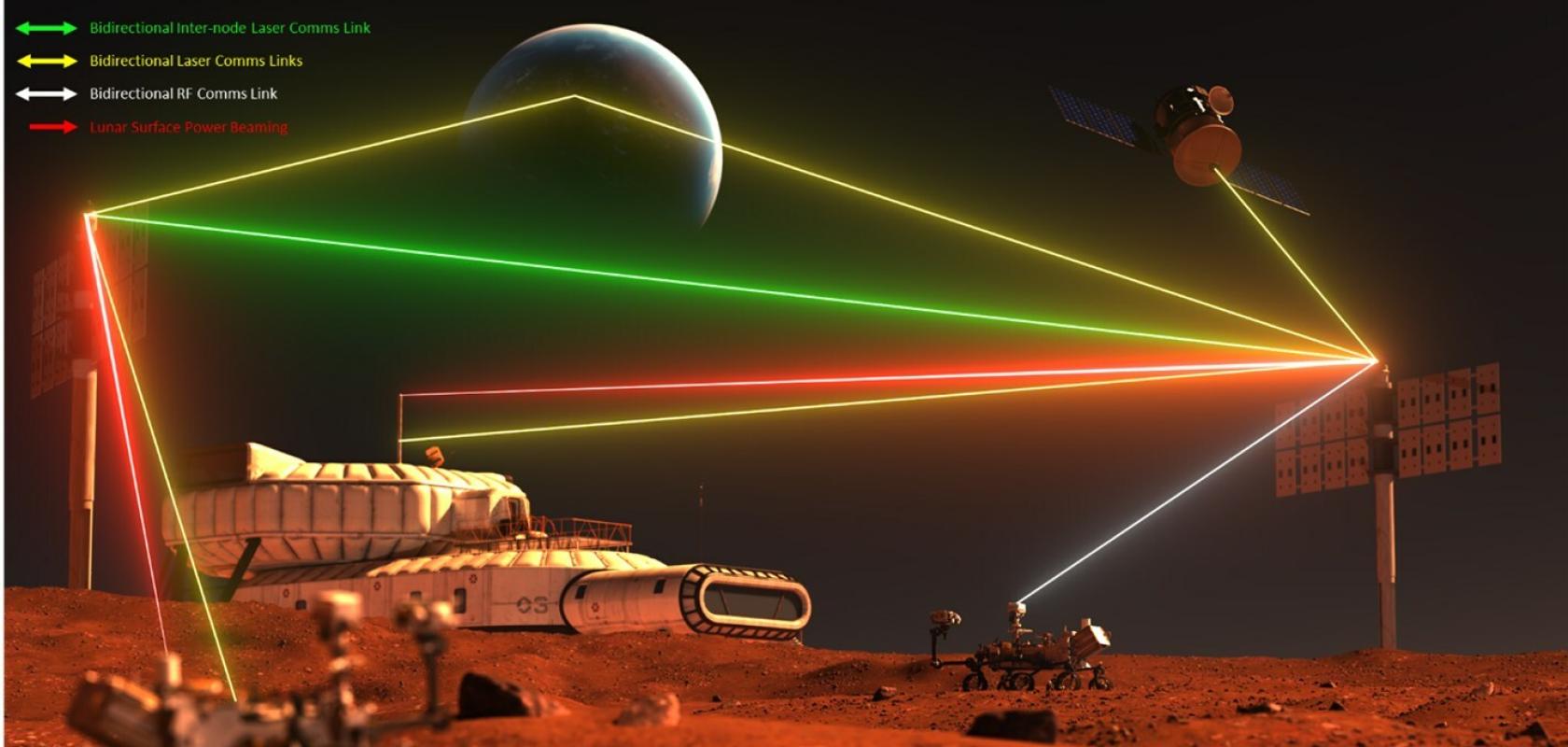
This matters because future infrastructure may not simply beam power to cities. It may beam power directly to remote facilities, military bases, ships, disaster zones, or even aircraft.
Some companies envision a future where orbital platforms act as energy routers. A satellite could redirect laser power dynamically depending on where electricity demand is highest.
Imagine a massive hurricane destroying power lines across a coastal region. Instead of waiting weeks for repairs, emergency stations could theoretically receive temporary energy from orbital systems.
The military implications are enormous. Nations understand that mobile energy transmission could become strategically valuable during conflicts or crises.
There are still major engineering challenges. Atmospheric interference, weather conditions, safety protocols, and energy loss remain serious obstacles. Precision targeting systems must become extremely reliable. Nobody wants an energy beam drifting off course.
Even so, investment continues growing because the potential payoff is massive.
The Investors Smell a New Gold Rush
Venture capital has flooded into AI infrastructure during the past few years. Now some of that money is moving toward space based systems.
Investors see multiple opportunities colliding at once:
- Artificial intelligence
- Space transportation
- Renewable energy
- Defense technology
- Semiconductor expansion
- Robotics
- Satellite communications
When several major industries overlap, capital moves aggressively.
Space infrastructure startups are attracting former executives from aerospace firms, military agencies, cloud computing companies, and energy sectors. Some companies focus on orbital manufacturing. Others focus on energy transmission. Others want autonomous robotic construction systems capable of assembling infrastructure in space without human crews.
The excitement resembles the early internet era in one important way. Investors believe foundational infrastructure is being built before the full commercial ecosystem even exists.
Back in the 1990s, many people did not understand why fiber optic networks mattered. Today global internet commerce depends on them completely.
Some investors believe orbital infrastructure may become equally fundamental for future AI economies.

The Military Dimension Cannot Be Ignored
Whenever critical infrastructure moves into space, defense agencies become deeply involved.
Orbital power stations and data centers would instantly become strategic assets. Governments would likely classify portions of these systems as national security infrastructure.
The military advantages are obvious:
- Independent power supply
- Resilient communications
- Global energy projection
- Enhanced satellite coordination
- Autonomous defense systems
- AI driven battlefield analysis
This raises difficult questions.
If a country depends heavily on orbital infrastructure, what happens during conflict? Could adversaries disable or attack these systems? Would orbital energy stations become military targets?
The line between civilian and military space infrastructure is already blurry. Satellite networks originally presented as civilian communication systems now carry strategic military significance.
Future orbital AI infrastructure may follow the same pattern.
This possibility explains why governments are investing heavily in space defense programs alongside commercial partnerships.
Manufacturing in Space
Another overlooked piece of the puzzle involves manufacturing.
Certain materials behave differently in microgravity environments. Some scientists believe advanced semiconductors, fiber optics, and specialized alloys could eventually be manufactured more efficiently in orbit.
If that becomes commercially viable, orbital infrastructure could evolve into a self reinforcing industrial ecosystem.
Imagine this chain reaction:
Space based solar stations power orbital factories. Orbital factories produce computing components. Orbital data centers process AI workloads. Autonomous robots expand infrastructure continuously without depending entirely on Earth.
That sounds futuristic, but pieces of the system are already under development.
Several companies are experimenting with manufacturing processes aboard satellites and orbital stations right now. The early results remain limited, yet the direction is clear.
The Environmental Argument
Supporters of orbital infrastructure often describe it as a climate solution.
Ground based data centers consume land, water, and electricity at enormous scale. As AI demand grows, some experts worry Earth based infrastructure expansion may become environmentally unsustainable.
Space based systems offer an alternative narrative. Orbital solar stations produce renewable energy continuously. Data centers in orbit reduce pressure on terrestrial grids. Some advocates even argue that moving heavy industry away from Earth could eventually reduce environmental damage.
Critics remain skeptical.
Rocket launches still produce emissions. Space debris remains a growing hazard. Manufacturing infrastructure for orbital systems requires substantial material extraction on Earth. Environmental benefits may not appear for years, if ever.
Still, the climate argument attracts political support because governments are searching for energy solutions that align with carbon reduction goals.
The Biggest Obstacles
Despite the excitement, enormous problems remain unresolved.
Cost
Even with reusable rockets, building industrial infrastructure in orbit remains extremely expensive. Launching large components still costs millions of dollars.
Space Debris
Earth orbit is becoming crowded. Thousands of satellites already circle the planet. Expanding infrastructure dramatically increases collision risks.
Maintenance
Repairing orbital systems is far more complicated than servicing terrestrial facilities. Autonomous robotics may solve part of the problem, but reliability standards must become extremely high.
Regulation
International law surrounding space infrastructure remains underdeveloped. Ownership rights, energy transmission rules, liability issues, and military concerns could trigger major political disputes.
Security
Any system transmitting power through lasers or microwaves creates security concerns. Governments will demand strict oversight and safeguards.
Public Acceptance
People may resist large scale orbital energy systems until safety concerns are fully addressed. Public trust matters, especially when discussing directed energy transmission.
China and the United States Are Racing Quietly
The global competition surrounding space infrastructure rarely dominates mainstream headlines, but it is intensifying quickly.
China has invested heavily in satellite expansion, lunar exploration, and space station development. The United States continues partnering with private aerospace firms while expanding military space capabilities through organizations like United States Space Force.
Both countries understand the same reality: future geopolitical influence may depend partly on who controls orbital infrastructure.
Artificial intelligence increased the urgency dramatically.
Whoever builds the largest scalable computing and energy systems could gain major economic and military leverage during the next several decades.
That is why space based AI infrastructure is no longer viewed as eccentric speculation inside government circles. It is increasingly treated as strategic planning.
The Moon May Become Part of the Equation
Some long term visions extend far beyond Earth orbit.
Lunar operations could eventually support orbital infrastructure through mining and material extraction. The Moon contains resources that may become useful for construction, fuel production, and manufacturing.
Launching materials from the Moon requires less energy than launching from Earth because lunar gravity is weaker. Some futurists believe future orbital stations may rely partly on lunar sourced materials.
The timeline for this remains uncertain. It may take decades before lunar industrial systems become practical. Still, multiple governments and private companies are already preparing for that possibility.
The race toward lunar infrastructure is not just about exploration anymore. It is increasingly tied to economics and computing power.
A New Industrial Era Above Earth
Most people still think about space in terms of astronauts, rockets, and planetary exploration. The next phase may look very different.
Instead of symbolic exploration missions, space could become an extension of industrial civilization itself.
Power stations.
Factories.
Server farms.
Autonomous construction platforms.
Communication grids.
Energy transmission systems.
AI infrastructure.
All operating above Earth in a permanently expanding network.
The strange part is how quickly the conversation changed. Only a few years ago, orbital data centers sounded like movie concepts. Today investors discuss them during earnings calls and infrastructure summits.
Not every ambitious idea will succeed. Some startups will collapse. Some technologies will fail. Some predictions will prove wildly premature.
But the direction is unmistakable.
Artificial intelligence is consuming so much energy and computational power that humanity is starting to look upward for solutions.
The next great technology boom may not be built in Silicon Valley alone.
Part of it may orbit thousands of miles above our heads.


Comments
Post a Comment