How to Build a Governance Framework for Autonomous AI Agents
Artificial intelligence has entered a new phase. Instead of simply answering questions or generating text, AI agents are increasingly making decisions, calling APIs, writing code, querying databases, scheduling workflows, and coordinating with other systems without constant human supervision.
That change introduces a security problem many organizations are not prepared for.
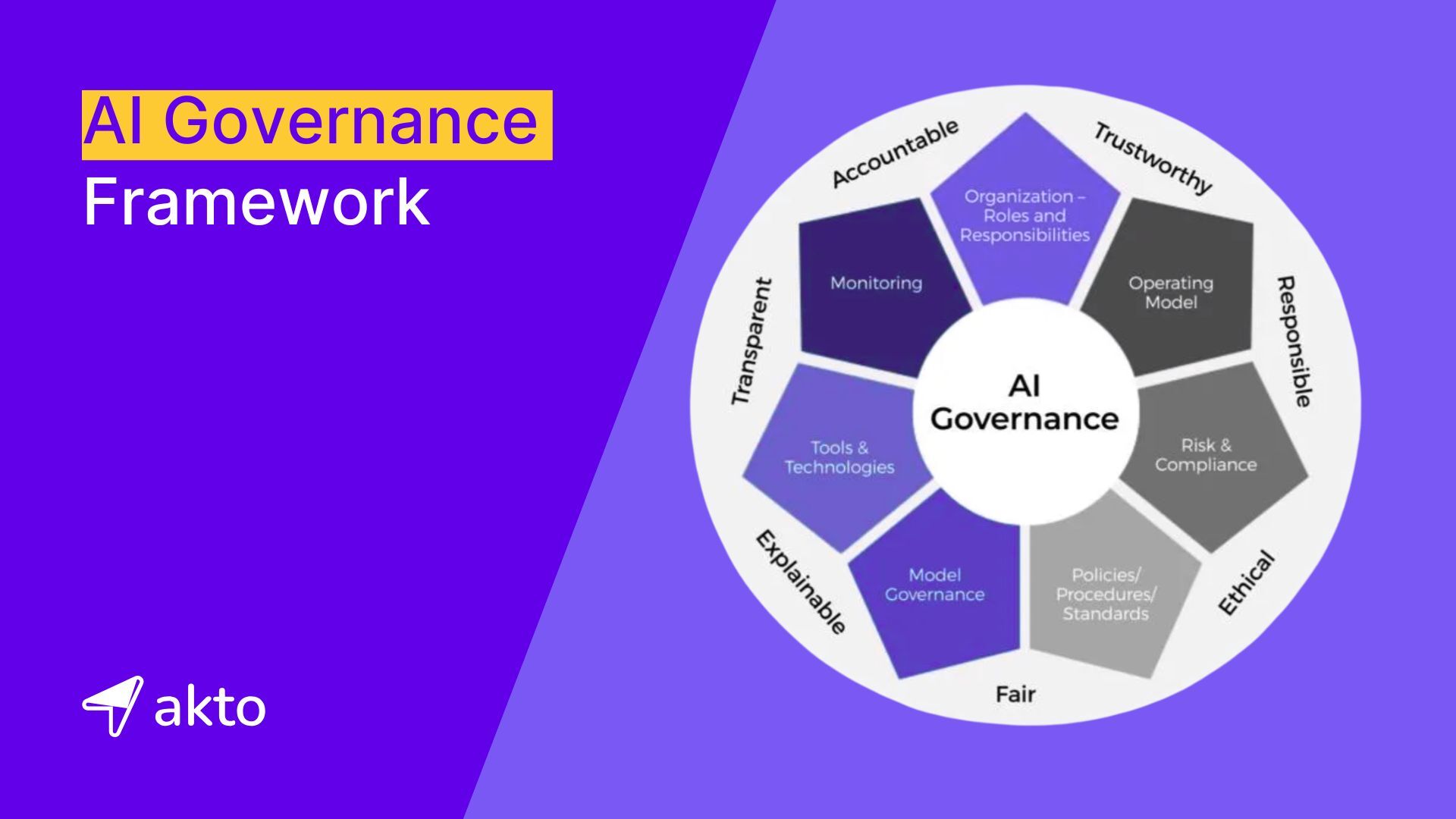
Traditional enterprise security assumes humans are the primary actors inside corporate systems. Identity platforms authenticate employees. Firewalls inspect network traffic. Endpoint protection monitors laptops and servers. These controls work reasonably well when every meaningful action originates from a person.
Autonomous AI agents break those assumptions.
An AI agent can analyze documentation, generate software, invoke dozens of external tools through the Model Context Protocol (MCP), and complete an entire workflow in seconds. It may perform thousands of actions before a security analyst notices anything unusual. Conventional identity management and network security were never designed to evaluate machine reasoning in real time.
This is why organizations need a different mindset.
Instead of focusing primarily on identity, they must govern behavior, intent, execution, and authority. Governance becomes the operating system that allows autonomous agents to deliver business value without creating unacceptable operational or security risks. Industry experts and regulators are increasingly reaching the same conclusion as agentic AI expands into critical enterprise functions.
Why Traditional Security Guardrails Break Down
Enterprise security has always relied on predictable behavior.
Employees receive specific permissions based on their job responsibilities. Applications have predefined access rules. Automated workflows follow scripted paths. Administrators know exactly which software can access which resources.
Autonomous AI agents are fundamentally different.
Rather than executing a fixed workflow, an agent evaluates a goal and determines how to accomplish it. If connected to MCP servers, the agent can discover available tools, select whichever appears appropriate, chain multiple tools together, and adjust its plan as new information becomes available. The workflow is dynamic rather than predetermined.
That flexibility creates enormous productivity gains.
It also creates an expanded attack surface.
Imagine giving an AI coding agent permission to update a software repository.
Its objective may be straightforward, fix a production bug before deployment.
To accomplish that task, however, the agent might search package registries, download third party libraries, modify configuration files, update dependencies, execute shell commands, run automated tests, and commit code.
Every additional capability increases the number of possible failure points.
Traditional Role Based Access Control (RBAC) cannot adequately distinguish between acceptable and dangerous behavior once broad permissions have already been granted. An agent with write access can still make poor decisions inside its authorized boundary.
The problem is no longer simply who has permission.
The question becomes whether the next action makes sense.
Governance therefore has to evaluate decisions continuously instead of validating identity once at login.
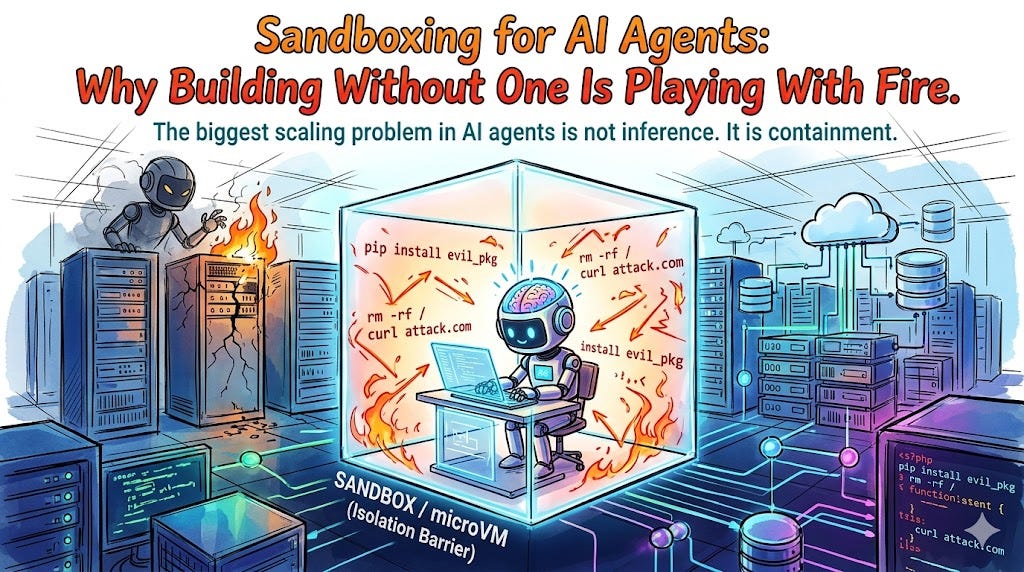
Pillar One, Deterministic Sandboxing
Every autonomous agent should begin its work inside an isolated execution environment.
Think of this as a secure playpen.
Instead of allowing agents to interact directly with production infrastructure, organizations should execute them inside temporary, disposable environments where every action is contained.
These environments should be ephemeral.
Once the assigned task finishes, the environment disappears completely, including temporary files, credentials, downloaded software, and execution history.
Deterministic sandboxing offers several important advantages.
If an agent executes an unexpected shell command, the impact remains confined to the sandbox.
If malicious code reaches the environment, it cannot automatically spread into production systems.
If the agent downloads an unsafe dependency or modifies critical files incorrectly, the organization can simply destroy the environment and start again.
This approach dramatically reduces blast radius.
Rather than trusting the agent completely, organizations trust the environment to enforce boundaries.
Modern governance guidance increasingly emphasizes this principle, placing enforcement infrastructure between AI agents and production resources instead of relying solely on model alignment.
Pillar Two, Real Time Intent Analysis
Most AI security discussions still focus on blocking prompts or filtering keywords.
That is no longer sufficient.
An autonomous agent rarely announces malicious behavior through obvious language.
Instead, governance systems should evaluate intent immediately before execution.
Suppose an agent plans to copy customer records into another application.
A governance engine should ask questions such as:
Does this action align with the assigned objective?
Is the requested data relevant to the task?
Is this destination approved?
Does this action exceed previous behavioral patterns?
Does organizational policy allow this operation?
Rather than evaluating only the input prompt, governance evaluates the proposed action itself.
Some organizations accomplish this using lightweight monitoring models that inspect execution plans before tools are called. Others implement dedicated policy engines that compare intended behavior against predefined governance rules.
The important principle remains consistent.
Every meaningful action should be evaluated before execution, not investigated afterward.
Behavioral governance is becoming increasingly important because autonomous agents continually adapt their workflows rather than following static sequences.
Pillar Three, Human in the Loop Thresholds
Not every AI decision deserves human review.
Requiring approval for every action would eliminate much of the productivity benefit autonomous agents provide.
The solution is structured escalation.
Organizations should build a Human in the Loop, or HITL, threshold matrix that classifies activities according to business risk.
Low risk activities may execute automatically.
Examples include reading documentation, summarizing meeting notes, generating internal reports, or drafting software documentation.
Medium risk activities may require automated policy validation before proceeding.
Examples include modifying development environments, updating test databases, or creating infrastructure templates.
High risk activities should always require explicit human approval.
Examples include transferring money, changing production database schemas, deleting customer records, rotating security credentials, approving payroll, or granting privileged access.
This structure transforms governance from an obstacle into a decision framework.
Instead of slowing everything down equally, organizations focus human attention where mistakes would be most expensive.
Many emerging governance frameworks now recommend matching oversight to an agent's autonomy level rather than applying identical controls across every deployment.
Building Guardrails for Agent to Agent Communication
Today's AI agents increasingly work together.
One agent retrieves information.
Another analyzes the results.
A third generates reports.
A fourth updates business systems.
This collaboration improves efficiency but creates another governance challenge.
How do you prevent sensitive information from spreading across multiple autonomous systems?
The answer begins with mutual agent authentication.
Just as websites authenticate users, agents should authenticate one another before exchanging information.
Every participating agent should possess a verifiable identity.
Every request should include cryptographic proof that the requesting agent is authorized.
Every shared context should remain limited to only the information required for the assigned task.
This principle mirrors the concept of least privilege that already exists within cybersecurity.
An agent responsible for financial forecasting should not automatically gain access to legal documents.
A customer support agent should not inherit software deployment privileges simply because another collaborating agent possesses them.
Context sharing must remain intentional, scoped, and verifiable.
Several emerging governance proposals recognize that communication protocols alone are insufficient. Agent interoperability must be paired with authorization, accountability, and audit capabilities that define who approved an action, which policies applied, and whether delegated authority remained within approved limits.
Governance Requires Continuous Visibility
Policies only matter if organizations can prove they are being enforced.
Every autonomous agent should generate comprehensive audit records throughout its lifecycle.
These records should answer straightforward questions.
Which objective was assigned?
Which tools were used?
Which APIs were called?
Which data sources were accessed?
Which approvals were required?
Who approved them?
What policy evaluated each action?
How long did execution take?
Complete audit trails simplify incident response, regulatory compliance, internal investigations, and performance optimization.
More importantly, they allow organizations to improve governance over time.
Patterns eventually emerge.
Certain workflows consistently require intervention.
Certain permissions remain unused.
Certain tool combinations produce unexpected behavior.
Governance improves as those observations feed future policy decisions.
Without visibility, organizations are simply hoping their safeguards work.
![AI Governance by Design for Agentic Systems: A Framework for Responsible Development and Deployment[v1] | Preprints.org](https://www.preprints.org/frontend/picture/ms_xml/manuscript/b597c89b86e289870cdeaf818f3f1fb9/preprints-156571-g001.png)
Governance Is the Accelerator, Not the Obstacle
Security teams sometimes worry that governance slows innovation.
The opposite is usually true.
Organizations hesitate to deploy powerful autonomous agents when they cannot confidently predict how those systems will behave.
Strong governance changes that equation.
When executives know agents operate inside isolated environments, undergo continuous behavioral evaluation, escalate high risk decisions to humans, authenticate every collaborating system, and generate complete audit trails, they become far more willing to expand AI adoption.
Governance creates confidence.
Confidence enables scale.
As autonomous AI becomes responsible for increasingly valuable business operations, success will depend less on building the smartest agent and more on building the safest operating environment around it.
The organizations that lead the next decade will not simply automate more work than their competitors.
They will deploy autonomous agents with clear boundaries, measurable accountability, and governance systems capable of evolving alongside the technology.
Those organizations will move faster because they know exactly where their AI is allowed to go, and exactly where it must stop.


Comments
Post a Comment